

Is Lucky Pays Safe? Complaints and Reputation
 Available in GB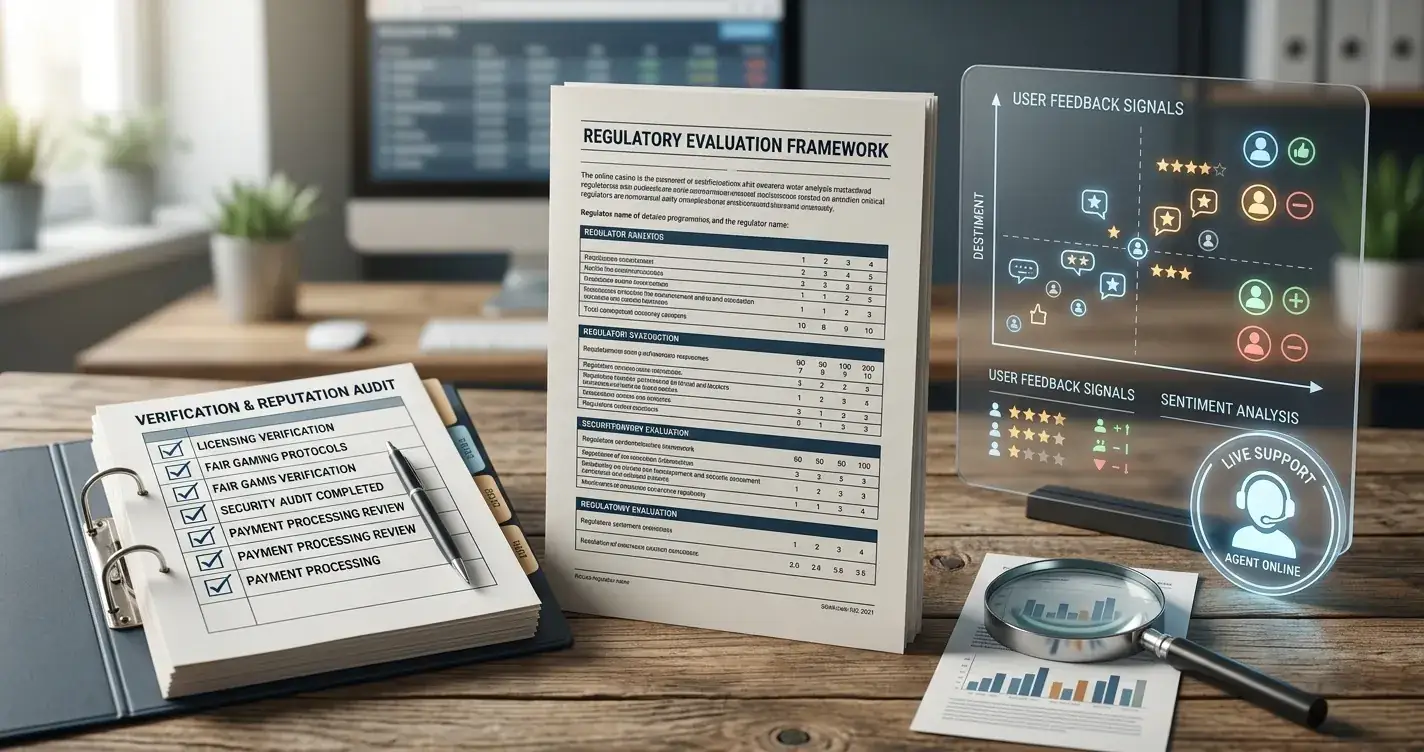
Lucky Pays has an Anjouan gambling licence listed in the public register, but available public records do not show a UK Gambling Commission licence for the brand. For a UK reader, that jurisdictional distinction is the most important hard fact in a safety assessment. Complaints and user reviews add useful risk signals, especially around withdrawals, KYC, terms and trust, but they do not prove that any individual allegation is true.
The right way to judge Lucky Pays is therefore to rank the sources by reliability: regulator records and current Terms carry more weight than star ratings, while repeated complaint themes are useful for identifying what to check before depositing.
Table of Contents
- What can be checked about Lucky Pays
- What complaints and reviews can actually tell you
- A practical source-quality grading
- How to interpret withdrawal complaints
- KYC complaints need the same discipline
- The licence is real, but the jurisdiction matters
- Responsible-gambling and support signals
- Checklist before depositing
- How to weigh the safety signals
What can be checked about Lucky Pays
The strongest safety facts are the ones that can be checked independently. Igloo Ventures SRL holds Anjouan licence ALSI-142311005-FI2. The official Anjouan Gaming register currently lists the licence as valid from 15 November 2023 to 14 November 2026. That confirms the licensee and the licence status in that jurisdiction.
The UK position is different. A check of the UK Gambling Commission register did not verify a UKGC licence for Lucky Pays. That distinction is important for British readers because an offshore Anjouan licence is not the same thing as UKGC authorisation or the consumer-protection framework attached to a UKGC-licensed remote operator.
Lucky Pays also has a documented responsible-gambling feature: self-exclusion is available through support. That is a concrete feature, but it should not be stretched into a broader claim that the site provides the same tools, limits or dispute routes as a UKGC licensee. The Lucky Pays licence guide goes deeper into the regulatory boundary.
What complaints and reviews can actually tell you
Review and complaint pages are useful as signals, but they are weak support for proving what happened in an individual account. Public review coverage around Lucky Pays frequently raises themes involving withdrawal delays or disputes, KYC, terms, licensing and trust. That makes those topics worth checking before depositing.
It does not mean every complaint is true. A public review usually contains one side of a transaction, and outsiders rarely see the full account history, payment records, identity documents, bonus state or operator fraud checks. Reviews can also be duplicated, exaggerated, incomplete or written before a case is resolved. On the other hand, dismissing every complaint because it is written by users would also throw away useful warning information.
The sensible approach is pattern recognition. Look for repeated themes across independent sources, then compare those themes with the operator’s actual published rules. A recurring complaint about withdrawals becomes more decision-relevant if the terms contain strict withdrawal, verification or account-review provisions. A one-off accusation with no documents and no corroboration should carry far less weight.
A practical source-quality grading
| Source type | Best use | Main limitation |
|---|---|---|
| Official regulator register | Licence holder, number, status and dates | Only covers that regulator’s jurisdiction |
| Operator Terms | Account rules, withdrawal conditions, restrictions and dispute clauses | Terms can change and still require interpretation |
| Independent independent reviews | Cross-checking features and identifying questions to investigate | Quality and freshness vary by publisher |
| User-review platforms | Spotting recurring service or payout themes | Individual allegations are not independently proven |
| Complaint forums | Seeing how a dispute was framed and whether a resolution was reported | Case facts can be incomplete or contested |
This grading prevents a common mistake: treating a star rating as if it carried the same evidential weight as a regulator entry. It does not. A reputation score is an aggregate opinion signal. A licence register is a primary record. A useful safety assessment keeps those categories separate.
How to interpret withdrawal complaints
Withdrawals deserve special attention because they combine fund transfers, identity checks and operator terms. Withdrawal concerns recur in public review coverage, while the operator’s current terms publish withdrawal limits and allow verification and security reviews. That combination makes payout rules a sensible pre-deposit reading priority.
A complaint about a delayed payment can have several possible explanations: ordinary processing, incomplete KYC, a payment-method mismatch, source-of-funds review, a disputed bonus condition or an operator-side service problem. Without the underlying account records, a public reviewer cannot establish which explanation applies to someone else’s case. Individual allegations therefore should not be treated as established facts.
The better test is whether the operator’s rules are clear enough for you to understand the conditions before funding the account. Read the withdrawal limits, check the available payout route and save the relevant terms. The separate Lucky Pays withdrawal coverage explains the published payout framework in detail.
KYC complaints need the same discipline
Identity checks are another area where review language can become misleading. The existence of KYC at Lucky Pays is supported by current sources. What is not safe to infer from a complaint is that every player will be asked for the same documents, that verification will always take the same length of time, or that a specific reviewer’s outcome predicts yours.
For risk assessment, focus on controllable factors. Register with accurate personal information, use funding methods that belong to you, keep access to the documents you normally use to verify identity and address, and avoid assuming that a first withdrawal will bypass checks. If a request arrives, compare it with the current Terms and support instructions rather than relying on material from an unrelated player’s case.
A universal KYC checklist would overstate the available information. Exact document requirements and processing times can vary by account, so unsupported document lists or fixed completion windows should not be presented as guaranteed steps.
The licence is real, but the jurisdiction matters
The Anjouan licence is not merely a claim copied between review sites. The current official register identifies Igloo Ventures SRL and licence ALSI-142311005-FI2 as valid through 14 November 2026. That is meaningful confirmation that the operator holds a gambling licence in Anjouan.
For UK readers, however, the relevant question is not only “is there a licence?” but “which regulator issued it?” Available public records did not verify a UKGC licence for Lucky Pays. Those two facts can coexist without contradiction: an operator can hold an offshore licence while not holding the local licence a reader might expect in Great Britain.
This distinction also helps interpret marketing language and third-party labels such as “licensed” or “legit”. Those words are too broad unless the jurisdiction is stated. A more precise description is that Igloo Ventures SRL holds a current Anjouan licence, while the UKGC public register shows no matching Lucky Pays licence. That is the current regulatory picture.
Responsible-gambling and support signals
Self-exclusion through support is a documented Lucky Pays feature. It is relevant because safety is not only about whether games run or payouts are processed; it also includes whether a player can stop access when gambling becomes harmful. Still, a single tool should not be inflated into a complete assessment of the operator’s responsible-gambling framework.
If control over gambling is a concern, the most important action is to use the strongest protections available to you rather than relying on reputation scores. A casino’s review profile can change quickly and cannot substitute for account limits, blocking tools, self-exclusion or independent support. Responsible-gambling functionality is therefore a separate factual layer, not a reason to dismiss or validate complaints.
Checklist before depositing
- Verify the licence jurisdiction rather than accepting the word “licensed” without context.
- Read current withdrawal and account-verification terms before funding the account.
- Check the live cashier for the methods actually available to your account.
- Treat repeated complaint themes as prompts for investigation, not proof of individual allegations.
- Save the terms and cashier information that apply when you deposit.
- Use payment methods in your own name and keep registration details accurate.
- Know how to contact support and how to request self-exclusion before you need it.
It can also help to understand the operator group rather than judging one domain in isolation. The Lucky Pays sister sites page covers the related operator context. For the complete brand-level assessment, return to the Lucky Pays casino review.
How to weigh the safety signals
Before depositing, save the current terms that affect your own account, note the support route available to you, and make sure the payment method is in your name. If a later complaint concerns a withdrawal or verification request, those account-specific records make it easier to distinguish a routine check from a disputed operator decision.
There is no responsible way to reduce the answer to a single yes/no label. The checkable side is clear: Igloo Ventures SRL holds a current Anjouan licence, the UKGC public register shows no matching Lucky Pays licence, and self-exclusion is available through support. The reputation side is less definitive: search and review material repeatedly makes withdrawals, KYC, terms, licensing and trust central evaluation themes, but individual complaints remain allegations unless independently established.
For a UK reader, that makes due diligence more important than a star score. Check the regulator jurisdiction, read the current transaction rules, understand how withdrawals and verification work, and decide whether the available protections match what you expect from an online casino. Reputation information is most useful when it tells you what to inspect next, not when it is treated as a substitute for primary records.
Written by the editors at Lucky Pays Casino.